
 English
 Español
 Portugues
 Pусский
 Français
 Deutsch
 日本語
日本語 한국어
한국어 العربية
 Italiano
 Nederlands
 Svenska
 Polski
 Türk dili
 हिन्दी
 Indonesia
 Melayu
 dansk
dansk Magyar
 қазақ
қазақ বাংলা
বাংলা עִברִית
 čeština
 українська
 беларускі
 Filipino
 Suomalainen
 հայերեն
 български
 Hrvatski
 galego
 नेपाल
नेपाल euskara
 Shqipëria
 Malagasy
 Башҡорт
 Türkmenler
 Ilocano
 Нохчийн


Ceramic capacitor
Ceramic Capacitors: An Overview Ceramic capacitors are among the most widely used passive electronic components, valued for their reliability, compact size, and cost-effectiveness. They are constructed using ceramic materials as the dielectric, sandwiched between conductive layers (typically metal electrodes), and then coated with an insulating outer layer. These capacitors are available in a broad range of capacitance values, voltage ratings, and package sizes, making them suitable for diverse applications in electronics. Types of Ceramic Capacitors Ceramic capacitors are categorized based on their dielectric material and performance characteristics: 1. Class 1 (NP0/C0G): These capacitors offer high stability, low losses, and minimal capacitance variation with temperature, voltage, or frequency. They are ideal for precision circuits such as oscillators, filters, and RF applications. 2. Class 2 (X7R, X5R, Y5V, etc.): These provide higher capacitance values in smaller packages but exhibit greater tolerance variations with temperature and voltage. They are commonly used in decoupling, bypassing, and general-purpose applications. Key Advantages - Small Size: Multilayer ceramic capacitors (MLCCs) allow high capacitance in miniature packages, supporting modern miniaturized electronics. - Low ESR/ESL: Their low equivalent series resistance (ESR) and inductance (ESL) make them efficient for high-frequency filtering. - Wide Voltage Range: Available from a few volts to several kilovolts, catering to low-power and high-voltage circuits. - Cost-Effective: Mass production and simple manufacturing processes keep costs low. Applications Ceramic capacitors are used in nearly every electronic device, including: - Power Supply Decoupling: Stabilizing voltage in power delivery networks. - Signal Coupling/Filtering: Blocking DC while allowing AC signals to pass. - RF/Microwave Circuits: Due to their high-frequency performance. - Consumer Electronics: Smartphones, laptops, and IoT devices rely on them for space-saving solutions. Challenges Despite their advantages, ceramic capacitors have limitations: - DC Bias Effect: Capacitance can decrease under applied DC voltage, especially in high-permittivity dielectrics (e.g., Y5V). - Microphonics: Mechanical stress can induce voltage spikes, affecting sensitive circuits. - Aging: Some Class 2 dielectrics lose capacitance over time. Future Trends Advancements in materials and manufacturing are pushing ceramic capacitors toward higher capacitance densities, better temperature stability, and improved reliability for next-generation electronics, including automotive, 5G, and AI hardware. In summary, ceramic capacitors are indispensable in modern electronics due to their versatility, performance, and affordability, making them a cornerstone of circuit design.
مصنوعات
درجہ بندی:
Capacitor
-
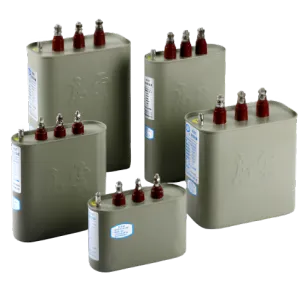
Compensation capacitor
قسم: Capacitorمناظر: 40سیریل نمبر:رہائی کا وقت: 2025-12-18 11:50:10Industry Background and Market Demand Cylindrical capacitors are widely used passive components in modern electrical and power systems, particularly in low- and medium-voltage applications where reliability, thermal stability, and space efficiency are critical. As global industries continue to electrify equipment and optimize energy efficiency, demand for power factor correction, reactive power compensation, and stable power quality has increased across manufacturing, infrastructure, and commercial facilities. In regions such as Europe and North America, stricter energy efficiency regulations and grid standards have accelerated the adoption of capacitor-based solutions in motors, HVAC systems, elevators, pumps, and industrial automation equipment. Cylindrical capacitor designs have become especially relevant due to their mechanical robustness, consistent thermal performance, and adaptability to modular system layouts. These characteristics make them suitable for both new installations and retrofitting legacy electrical systems.
خبریں
درجہ بندی:
-
[Industry News]Capacitor Types Explained: Shunt Capacitors vs Filter Capaci...
2025-12-24 17:25:59 -
[Industry News]What Is a Shunt Capacitor and How It Improves Power Factor
2025-12-25 09:34:02
مسلہ
درجہ بندی:
ابھی تک تلاش کا کوئی نتیجہ نہیں!
ویڈیو
درجہ بندی:
ابھی تک تلاش کا کوئی نتیجہ نہیں!
ڈاؤن لوڈ کریں
درجہ بندی:
ابھی تک تلاش کا کوئی نتیجہ نہیں!
بھرتی
درجہ بندی:
ابھی تک تلاش کا کوئی نتیجہ نہیں!
تجویز کردہ مصنوعات
ابھی تک تلاش کا کوئی نتیجہ نہیں!



 واٹس ایپ
 ٹیلی فون